Save Mollem Movement
There are three projects planned over 170 hectares in and around Mollem, cutting across the land of Bhagwan Mahaveer Sanctuary and Mollem National Park:
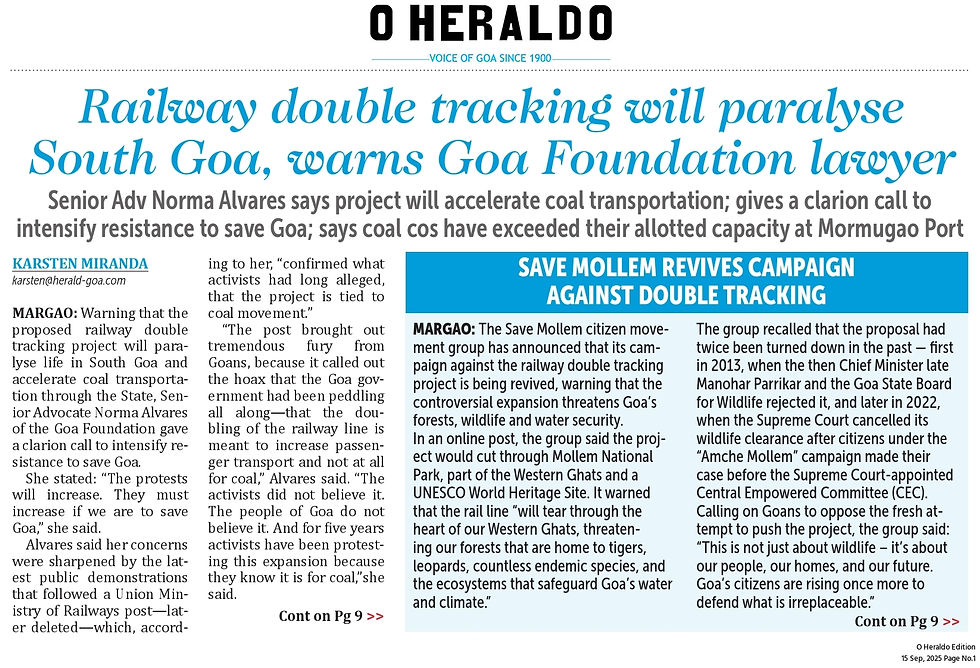
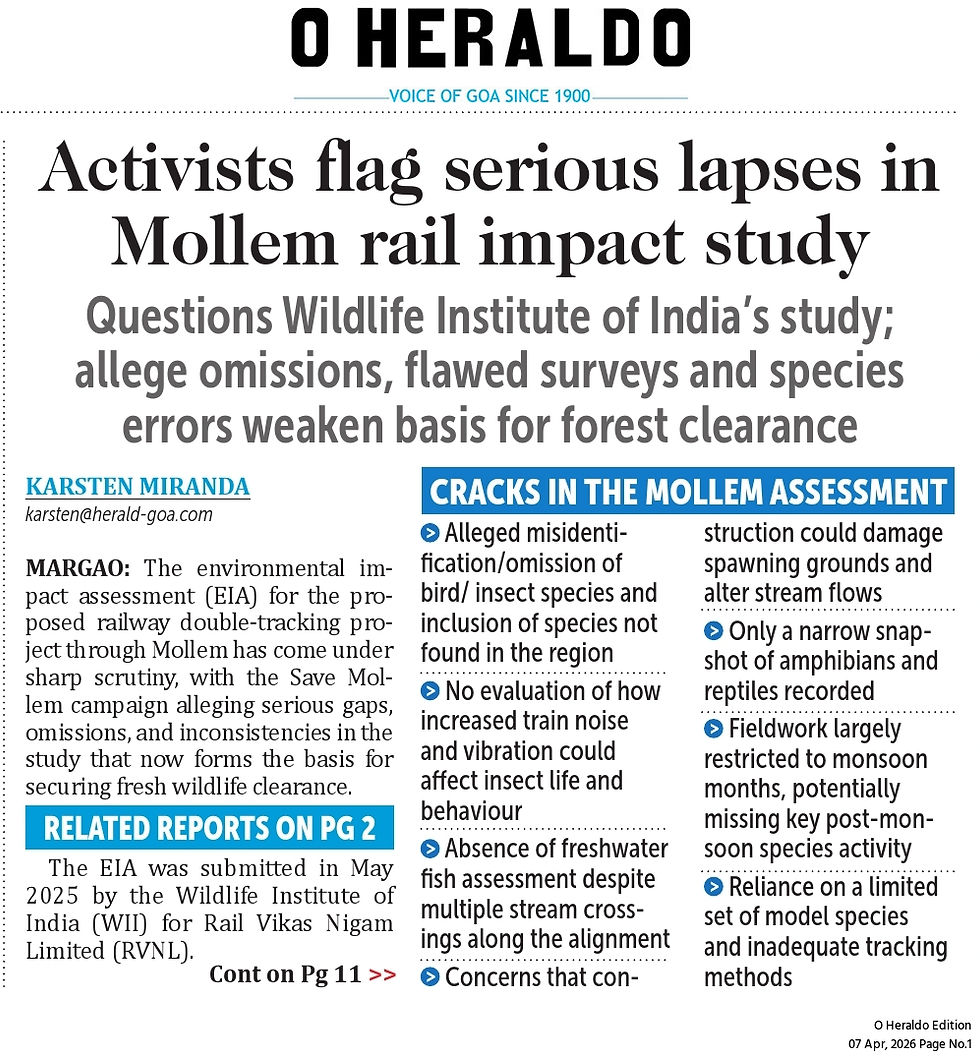
1. The South Western Railway's double-tracking project: The laying of a second track parallel to the existing one from Castlerock to Kulem as part of the Hospet-Tinaighat-Castlerock-Kulem-Vasco railway project. The total length of the proposed railway track is 363km, of which 26 km will pass through the forest. Rail Vikas Nigam Ltd (RVNL) is carrying out this project.
2. The expansion of National Highway-748 (formerly4A): The widening of the National Highway 748-A, which connects Karnataka and Goa, from a two-lane to a four-lane road. The road and intended expansion pass 13km through the forest. The Public Works Department (PWD) of Goa and the National Highway Authority of India (NHAI) are carrying out this project.
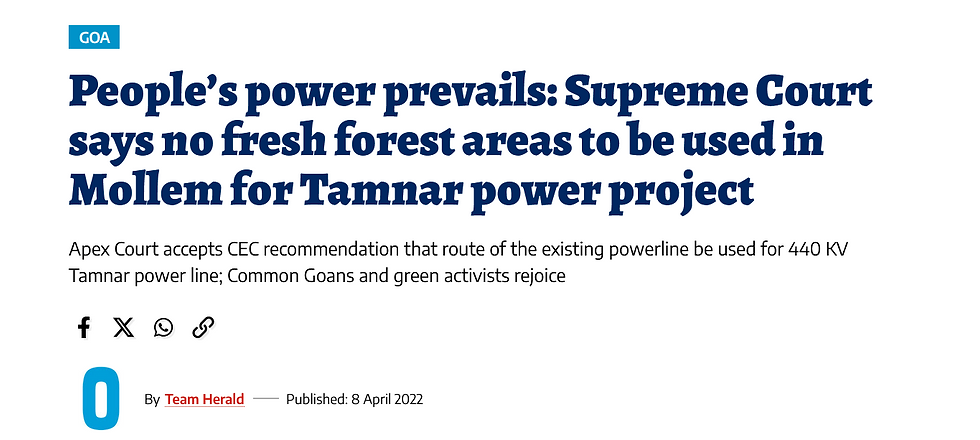
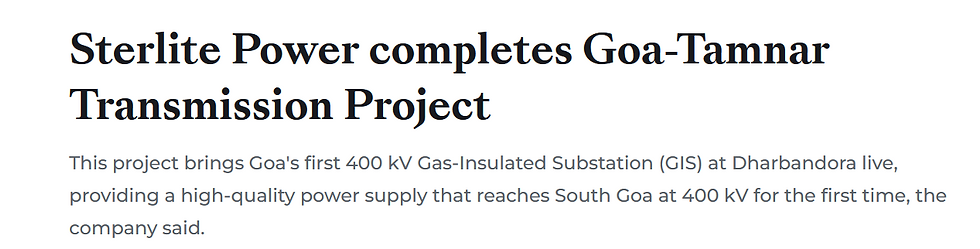
3. The Tanmar power transmission line: The laying of a 400 kV D/C transmission line between Narendra, Karnataka, to Xeldem, Goa, terminating at a 400/200 kV substation. 3.15 km of this line will pass through the forest. Goa- Tamnar Transmission Project Ltd (Sterlite Power) is carrying out this project.
These infrastructure projects were sanctioned under the Sagarmala master plan for Mormugao port to transform Goa into a coal corridor and facilitate the transportation of increased coal imports to Karnataka's steel plants.
The railway project received wildlife clearance from the National Board for Wildlife (NBWL) in December 2019. The highway expansion and the power transmission line project were granted wildlife clearances in April 2020 during the COVID-19 lockdown. While environmental impact assessments (EIA) were undertaken for the first two projects and not for the third, these projects were not evaluated for their cumulative environmental impact on Mollem National Park and Bhagwan Mahaveer Wildlife Sanctuary. Wildlife researchers, scientists and environmentalists have criticised the EIAs of these projects for inaccurate biodiversity assessments and shortcomings of the presented mitigation measures, publishing a peer-reviewed monograph as well in 2021.
The preservation of Mollem National Park and Bhagwan Mahaveer Wildlife Sanctuary is important. The forest area forms part of a contiguous tiger corridor connecting Goa, Karnataka and Maharashtra. It is home to hundreds of plant, animal, and insect species, some of them endemic (found only in this forest). It is a habitat for endangered species such as the tiger, dhole, mousedeer, gaur, Indian pangolin, and many others. As part of the Western Ghats, it is recognised by UNESCO as a World Heritage Site and is also one of the 36 global biodiversity hotspots. It is also important for hinterland and nature-based tourism. Dudhsagar waterfalls are located here, a popular tourist attraction, and many heritage homes are around the forest areas. The forest streams also feed into Goa's rivers, such as the Mandovi, and are important to the state's freshwater supply.
The extensive damage caused to these forest lands would have far-reaching consequences. They would lead to habitat fragmentation, increased wildlife mortality, and affect streams that feed the main Goan rivers. It would also disrupt the tourism and agricultural sectors, damaging heritage sites near these transportation infrastructures and affecting crops and fisheries. An increase in coal dust pollution from these projects would lower living standards.
Protests against the projects began in 2020, led by a unique, youth-led movement called 'Save Mollem' that utilised social media to organise and run digital awareness campaigns. It was a culmination of legal and cultural resistance against the construction of these projects, which utilised art and science to highlight the forests' importance to the public. Various stakeholders, including residents, environmentalists, researchers, tourism businesses, and heritage groups, voiced their opposition to the infrastructure plans and urged their withdrawal. In November 2020, people also held a massive protest and candlelight vigil on the railway tracks in Chandor.
The Goa Foundation led a petition before the Supreme Court-appointed Central Empowered Committee (CEC) in June 2020 against the projects and the wildlife clearances granted for them. The CEC released a 2021 report recommending the cancellation of the double-tracking project and the laying of a new transmission line for the Tanmar project, and suggesting a sustainable alternative along the existing 110/220 kV line corridor. It also recommended that the widening of the NH-748 would require environmental clearances that had yet to be granted. This led to the Supreme Court revoking the wildlife clearances and issuing an abeyance order on 17 April 2022, temporarily stopping these projects. However, the Supreme Court added that the RVNL could conduct another detailed EIA and then submit a fresh proposal to the NBWL in accordance with the law.
The power transmission line was nevertheless constructed by November 2024, while the railway and highway projects are still being contested in court.