TCPA Sections 17(2) and 39(A)
Large-scale land conversions have been continuing in Goa, with a booming real estate market. Sections 17(2) and 39(A) are two contentious amendments of the Town and Country Planning Law that are central to recent land conversions and protests around them.
1. Section 17(2) came into effect on 01 March 2023 and enables the Chief Town Planner (CTP) to alter the RP 2021 to "correct" inadvertent errors or "inconsistent" zoning and carry out spot zoning changes based on individual applications without public consultation.
2. Section 39(A) came into force on 22 February 2024 as a replacement for section 16B and empowers the CTP to alter or modify the RP 2021 or Outline Development Plan (ODP) for land zoning changes based on individual applications, excluding eco-sensitive areas, and subject to a 30-day public notice.
Local residents and activists are opposing these sections due to the indiscriminate, plot-by-plot conversion and sale of land for real estate development and tourism. Green zones, such as paddy fields, orchards, agricultural land, and no-development zones, are converted to settlement zones for high-end gated residential communities, and villas for metropolitan buyers looking to buy 'second' homes; and for tourism projects and resorts, fueling land and property prices in Goa. Activists argue that the two sections alter and replace consultative processes for land-use zoning with arbitrary spot zoning based on private applications. The growing scale of conversions causes significant environmental degradation and water scarcity, adversely affecting local communities and often excluding them from developmental benefits.
Protests and legal campaigns have challenged the two sections since 2023. The Goa Foundation, Khazan Society of Goa, and Goa Bachao Abhiyan filed a 2023 public interest litigation (PIL) against the constitutional validity and the rules and guidelines of section 17(2). While section 17(2) has not been repealed, in 2025, the High Court of Bombay at Goa restrained the government from accepting additional approvals by reading down the section's rules and guidelines. The court also revoked permissions for land conversions of 26.5 lakh sqm granted earlier. The state government, in response, filed a special leave petition to the Supreme Court, appealing against the High Court's order. The Supreme Court declined to stay the High Court's judgment but ordered the maintenance of the status quo. It also directed the High Court to adjourn indefinitely any fresh petitions against section 17(2).
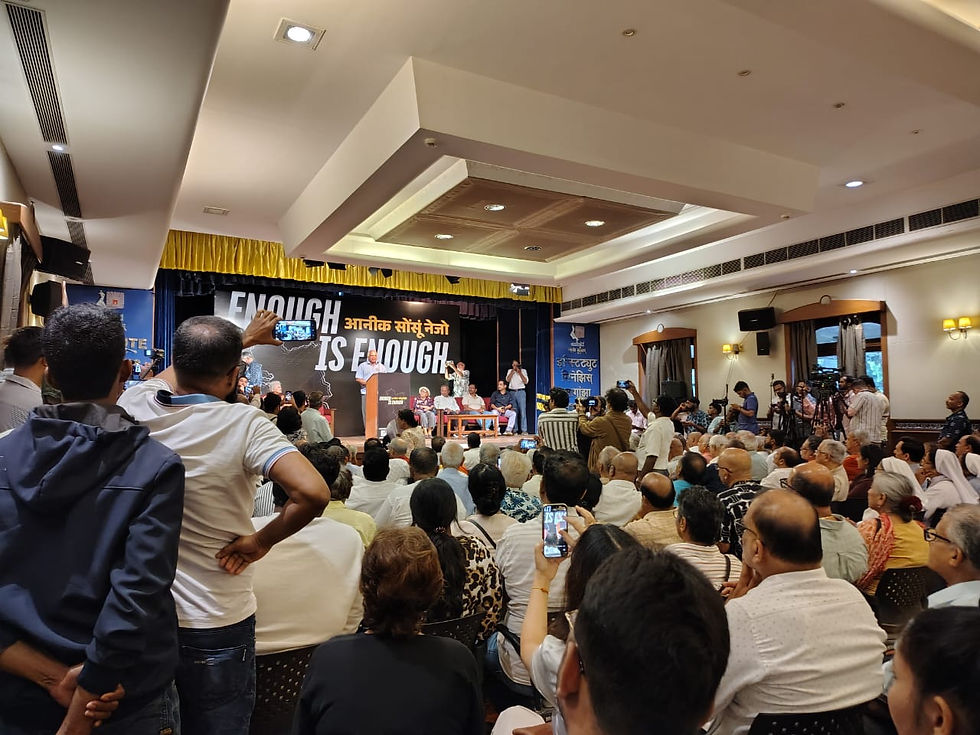
The Goa Foundation, Khazan Society of Goa, and Goa Bachao Abhiyan, along with Pilerne Citizens Forum (PCF) and 3 individual activists, have also filed petitions against section 39(A). Goyche Fuddle Pillge Khatir (GFPK) has raised objections to land conversions proposed under this section in 2024. In Arambol, village-level protests in 2025 led to the rollback of a proposed zoning change of 3.2 lakh sqm of land in Bhatwadi hills from no-development to settlement zone in the lead up to the pan-Goa 'Enough is Enough' movement led by former Allahabad High Court Chief Justice Ferdino Rebello and a coalition of activists, NGOs, and concerned citizens. The campaign's overall demands include: the immediate repeal of sections 17(2) and 39(A); amendment of the Goa Land Revenue Code to prevent sale of agricultural land for non-agricultural purposes; immediate halt to projects involving hill cutting, development near water bodies, forested areas, and CRZs, and construction of mega-housing projects; guaranteed access to at least 4 hours of water supply, along with the suspension and probing of negative declarations* issued under the Goa Agricultural Tenancy Act in the last 5 years; and approvals granted for zoning changes. Developmental projects must align with the RP 2021 or the ODP to protect Goa's environment. The campaign's first public meeting was held at Panjim in January 2026, followed by multiple meetings across the state.
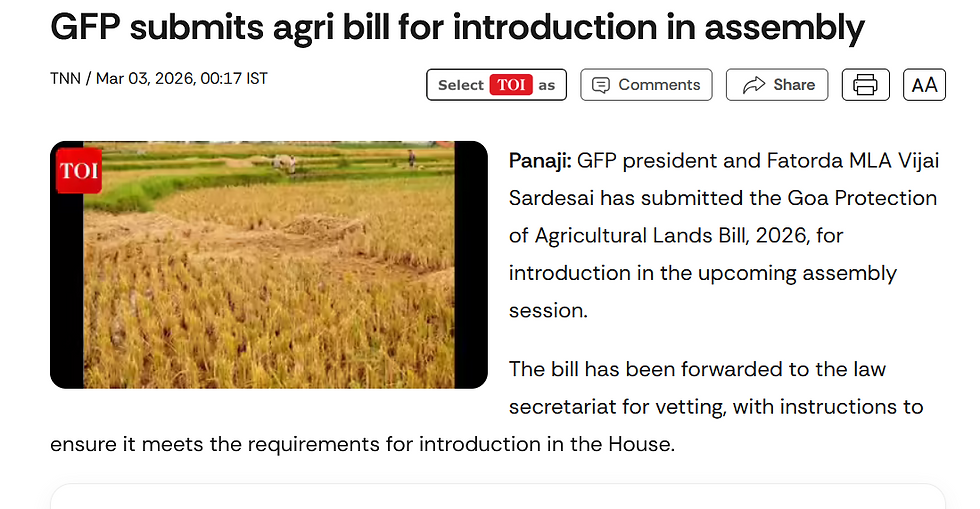
In February, the campaign also drafted and submitted the "Goa Protection of Agricultural Land" bill, which aims to protect agricultural land by imposing a strict regulatory framework on its sale, transfer, and management, along with restrictions on hill cutting. Additionally, in February 2026, villagers from Siridao-Palem stormed the TCP office demanding the scrapping of nine zoning approvals under section 39(A) in St Andre constituency. Villagers subsequently launched a 'do or die' hunger strike and a maha andolan at Azad Maidan. After a six-day standoff between the government and protestors, zoning approvals in St Andre were suspended. The cancellation of land conversions in St Andre was followed by similar rollbacks in Sanquelim and Maulinguem in March.
*Negative declaration enables landowners to remove tenants from land records and apply for land use conversions from agricultural to settlement lands.